How to Fix a Stiff Neck with a Memory Foam Pillow
 Priya RamanSenior Analyst
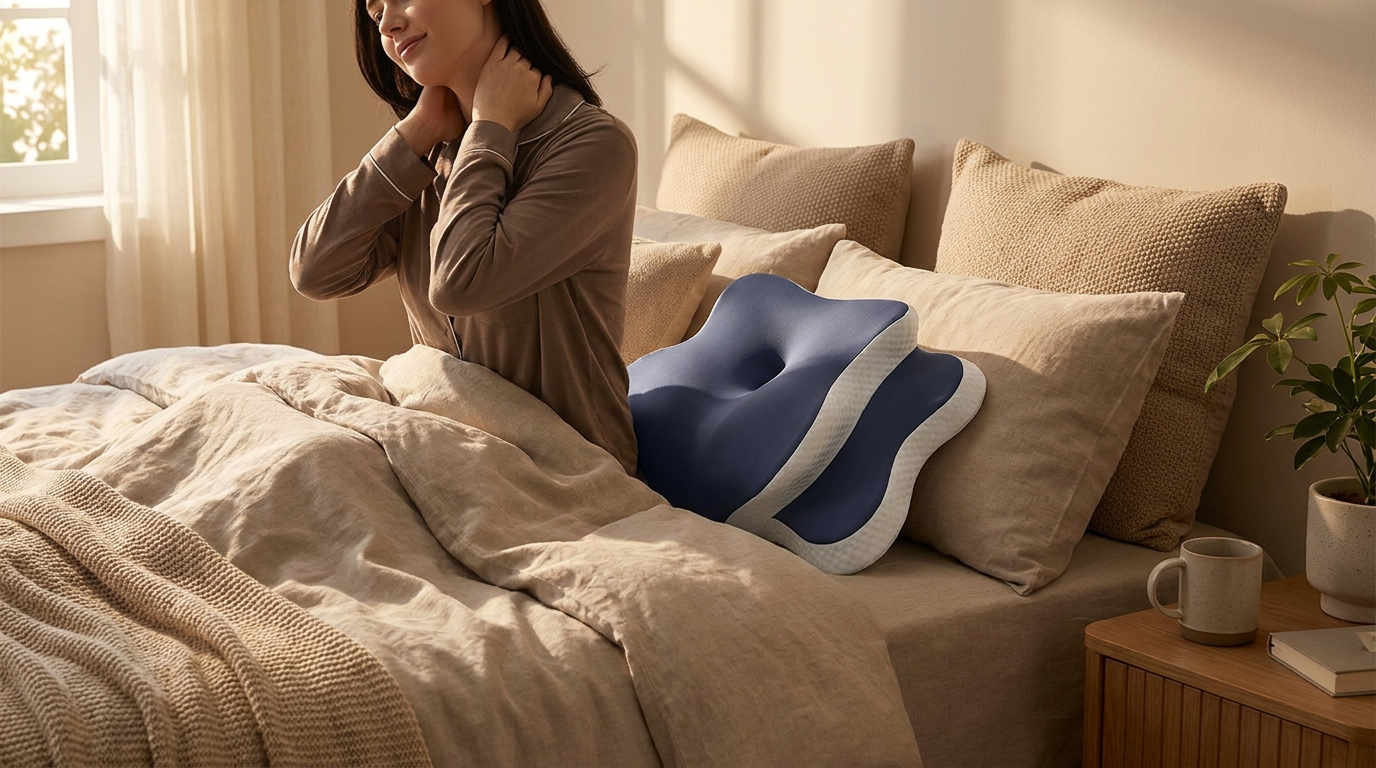
Waking up to sharp, restrictive neck pain is a frustrating way to start the day. This stiffness, which limits your range of motion, often stems from poor sleep posture. When your pillow fails to provide adequate support, your head and neck fall into unnatural angles, straining muscles and ligaments. The Memory Foam Cervical Pillow Neck Pain Relief is engineered to be a definitive stiff neck remedy pillow, addressing the root cause by maintaining proper spinal alignment throughout the night.
The Anatomy of a Stiff Neck: Why Your Pillow Matters
A stiff neck from sleeping is a mechanical issue. Using a traditional, unsupportive pillow (like down or fiber-fill) causes your head to either sink too low or be propped too high, forcing the cervical spine out of its neutral C-curve. Consequently, muscles like the levator scapulae and trapezius become overstretched or contracted for hours.
This prolonged strain leads to:
- Muscle Fatigue: Muscles work all night to support your head, preventing relaxation and repair.
- Inflammation: Micro-tears and stress in muscle fibers trigger pain and stiffness.
- Reduced Blood Flow: Compressed muscles can impede circulation, slowing the removal of metabolic waste and hindering recovery.
How Our Cervical Pillow Delivers Targeted Relief

Photo by Andrea Piacquadio on Pexels
The Memory Foam Cervical Pillow Neck Pain Relief uses material science and ergonomic design to correct sleep posture and alleviate pain. It acts as a tool for therapeutic alignment.
The Pre-Sleep Habits That Protect the Night
What happens in the thirty minutes before sleep can undo what the pillow does in the eight hours after. The chief offender is phone posture in bed: propped on pillows with the chin driven toward the chest, scrolling loads the exact muscles the contour is about to try to relax — and an hour of it hands the pillow a neck already in spasm. The fix is positional, not abstinent: if screen time in bed is non-negotiable, hold the device up at eye level with elbows propped, or lie on one side with the phone resting on the mattress, rather than curling the neck downward. Side sleepers have a second habit worth auditing: the arm wedged under the pillow. It feels supportive and quietly cranks the shoulder and neck out of line all night; the arm belongs in front of the body, hugging a spare pillow if it wants a job. Small pre-sleep corrections compound — the pillow performs noticeably better for people who arrive at it with a neutral neck.
Ergonomic Contour for Spinal Alignment
The distinctive contour shape is the primary feature for combating stiffness. The wave-like design includes a higher and lower curve, creating a cradle that fills the gap between your head, neck, and shoulders. This ensures the spine remains straight, reducing mechanical stress on cervical vertebrae. A properly aligned spine is fundamental to recovery, as detailed in our orthopedic pillow for neck alignment guide.
High-Density Memory Foam for Adaptive Support
Unlike materials that flatten, our high-density memory foam responds to heat and pressure, contouring to your unique anatomy. This distributes weight evenly, eliminating pressure points at the base of the skull. As noted by Forbes Vetted in their review of the best pillows for neck pain, shape-retaining materials are critical for consistent support. This prevents your head from sinking, a common cause of morning stiffness.
Alleviating Tension and Promoting Recovery
By stabilizing the neck, the pillow allows muscles to enter complete relaxation. Relief often extends beyond the neck, helping to ease morning headaches. This is a key benefit for those seeking a pillow for tension headache relief, as it addresses muscular tension at the source. Stable support ensures unimpeded blood flow, crucial for flushing out inflammatory byproducts and delivering oxygen for tissue repair.
Frequently Asked Questions

Can I combine heat or cold with the pillow routine?
Yes, and timing decides which to reach for. Warmth is the evening tool: a warm compress, heat wrap, or hot shower on the neck and shoulders in the last half hour before bed relaxes the muscles into the receptive state the contour supports best, and it pairs particularly well during the first adjustment weeks when the muscles are re-learning their resting position. Cold earns its place only in the first day or so after a distinct strain — a sudden wrong movement, an overzealous workout — where brief icing calms the initial irritation; it has little role in routine nightly maintenance. The combination to avoid is falling asleep on an electric heating pad, which trades muscle relaxation for burn risk and overheated, restless sleep. A microwaveable wrap that cools on its own, used before rather than during sleep, delivers the benefit without the hazard — and lets the pillow do the overnight shift it was designed for.
How long does it take to adjust to a cervical pillow?
Most users require 7 to 14 days. During this time, your muscles re-learn how to relax in a correctly aligned posture. You may feel initial unfamiliarity as your body unlearns compensatory habits from unsupportive pillows.
Will this pillow work for both side and back sleepers?
Yes, the Memory Foam Cervical Pillow Neck Pain Relief features a dual-height contour. Back sleepers typically use the lower side to support the natural curve of the neck. Side sleepers should use the higher side to fill the space between the ear and mattress. Choosing the right ergonomic contour pillow for sleeping is crucial for effectiveness.