Memory Foam Cervical Pillow Neck Pain Relief for Side Sleepers
 Sam VasquezBuying Guide Lead
July 19, 2026. This comparison evaluates how specific orthopedic designs manage spinal alignment for those who sleep on their sides. It is written for side sleepers who wake up with shoulder pressure or neck stiffness and need a firm, contouring solution.
The Mechanical Conflict of Side Sleeping
Side sleeping is often recommended for breathing and digestion, but it creates a unique mechanical challenge for the cervical spine. When you lie on your side, the distance between your ear and the tip of your shoulder must be bridged by a pillow that is firm enough to resist compression. If the pillow is too soft or too low, the head tilts toward the mattress, overstretching the muscles on the opposite side of the neck. According to Sleepopolis in their evaluation of the Best Orthopedic Pillows (2026), firm contouring is essential for side sleepers who need help maintaining a healthy posture. This is especially true when dealing with a pillow for pinched nerve in neck scenarios, where any deviation from a neutral spine can lead to radiating pain or numbness in the arms.
I have seen many people try to solve this by stacking two standard pillows, but this usually creates an unstable surface that shifts during the night, leading to the very tension headaches they are trying to avoid. If you are struggling with a cervical pillow for straight neck syndrome, you know that consistent support isn't just about comfort; it is about physical therapy while you sleep. The goal is to keep the nose aligned with the sternum. When the gap between the shoulder and the neck isn't filled properly, the upper shoulder often collapses forward, which also strains the upper thoracic spine. This is why a standard rectangular pillow rarely suffices for those with chronic cervical issues.
Comparing Memory Foam Cervical Pillow Neck Pain Relief and Alternatives

Photo by Kindel Media on Pexels
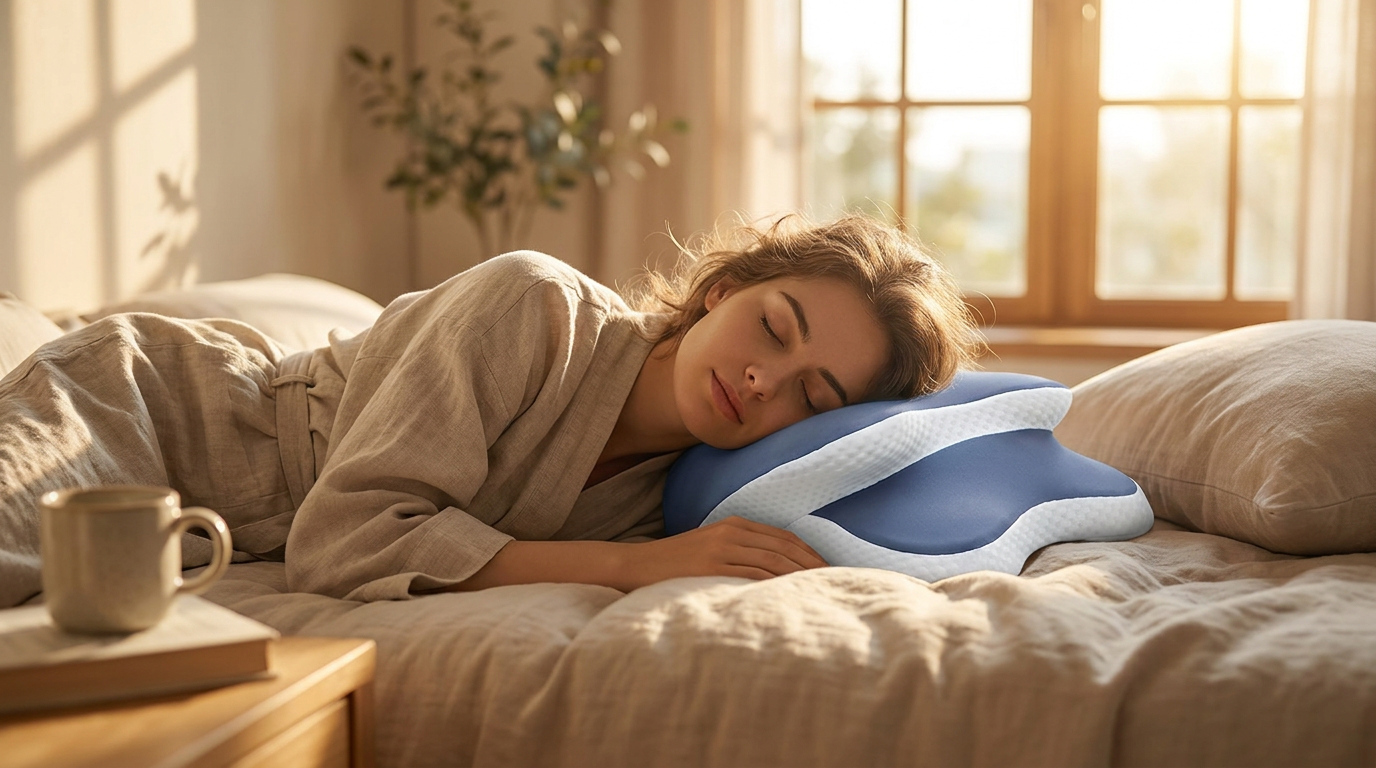
When looking at the market, the Memory Foam Cervical Pillow Neck Pain Relief stands out because it uses a high-density, ergonomic contour specifically shaped to cradle the head while supporting the neck's natural curve. Between this and the Dosaze™ Contoured Orthopedic Side Sleeper Pillow, there are distinct differences in how they handle height. The Dosaze™ model is explicitly designed for side sleepers to align the neck and spine using CertiPUR-US® Certified Premium Memory Foam. However, our Memory Foam Cervical Pillow Neck Pain Relief often provides a more aggressive contour that caters to those who need an ergonomic pillow for neck pain that won't lose its shape under the weight of a heavy head.
Another option often discussed is the Tempur-Pedic TEMPUR-Neck pillow, which Sleepopolis notes is a firm choice for back and side sleepers. While the TEMPUR-Neck is a classic, it can sometimes feel too rigid for those transitioning from traditional pillows. If you're on a budget, you might look at the Relax the Back ContourSide pillow mentioned in Mayo Clinic's community discussions, which comes in various depths like 3", 4", and 5". Here's what I'd actually buy: the Memory Foam Cervical Pillow Neck Pain Relief. It strikes the best balance between the firm loft required for side sleeping and the contouring needed for university height tension headache relief. Skip this if you are a dedicated stomach sleeper; the loft required for a side sleeper will be far too high and will likely cause hyperextension of your neck if you flip onto your front.
Selecting the Right Loft and Density
Choosing an orthopedic pillow requires more than just picking a brand; you have to match the pillow's dimensions to your own frame. A petite person with narrow shoulders will need a lower loft than someone with a broad build. If the pillow is too high, it pushes the head upward, causing the same misalignment as a pillow that is too low. When testing a memory foam cervical pillow neck pain relief, you should feel an immediate release of tension in the traps and the base of the skull. This is the primary indicator that the pillow is doing the work of holding your head up, rather than your muscles.
Before making a final decision, use this checklist to ensure the pillow fits your side-sleeping needs:
- Measure the distance from your neck to the edge of your shoulder to determine the necessary loft.
- Ensure the memory foam is high-density so it doesn't bottom out during the night.
- Check for a recessed center that allows the ear to rest comfortably without excess pressure.
- Verify that the foam is CertiPUR-US® certified to avoid off-gassing and ensure durability.
- Look for a removable, breathable cover to manage heat, as memory foam can retain warmth.
Shop Memory Foam Cervical Pillow Neck Pain Relief here.
Sources

Photo by Andrea Piacquadio on Pexels
- Dosaze™ Contoured Orthopedic Side Sleeper Pillow
- pillow for side sleeping
- Best Orthopedic Pillows (2026)