Selecting a Memory Foam Cervical Pillow for Pinched Nerves
 Maya ChenContributing Editor
November 1, 2026. This analysis identifies the mechanical requirements for a memory foam cervical pillow to mitigate nerve compression in the neck. It is intended for consumers navigating the complexities of cervical radiculopathy and spinal alignment.
The Mechanical Failure of Standard Pillows
The conventional wisdom says that a soft, high-loft pillow is the gold standard for comfort, yet for individuals suffering from a pinched nerve, this setup is often the primary antagonist. When a nerve is compressed in the cervical spine, the objective is not "cushioning" in the traditional sense; it is the maintenance of a neutral lordotic curve to prevent further foraminal narrowing. According to Dr. Grant Cooper of the Princeton Spine and Joint Center, as noted by The Best Pillow for Neck Pain (Most People Choose Wrong) - YouTube, the right pillow must keep the head, neck, and spine in a straight line to reduce pain. Most standard pillows fail because they allow the head to tilt upward or sink too deeply, creating a fulcrum point that exacerbates pillow for pinched nerve in neck symptoms.
Run the math: the human head weighs between 10 and 12 pounds. On a standard fiber-fill pillow, that weight is distributed unevenly, causing the cervical vertebrae to shift out of alignment. This shift is particularly damaging for those already dealing with pillows for pinched nerve in neck issues, where even a three-degree deviation can increase pressure on the nerve root. The consensus that "softer is better" ignores the structural reality that a pinched nerve requires rigid, predictable support rather than reactive cushioning. Without a stable base, the neck muscles remain in a state of micro-contraction all night to protect the spine, leading to the morning stiffness often associated with pillow for pinched nerve in neck complaints.
Engineering Alignment with Memory Foam
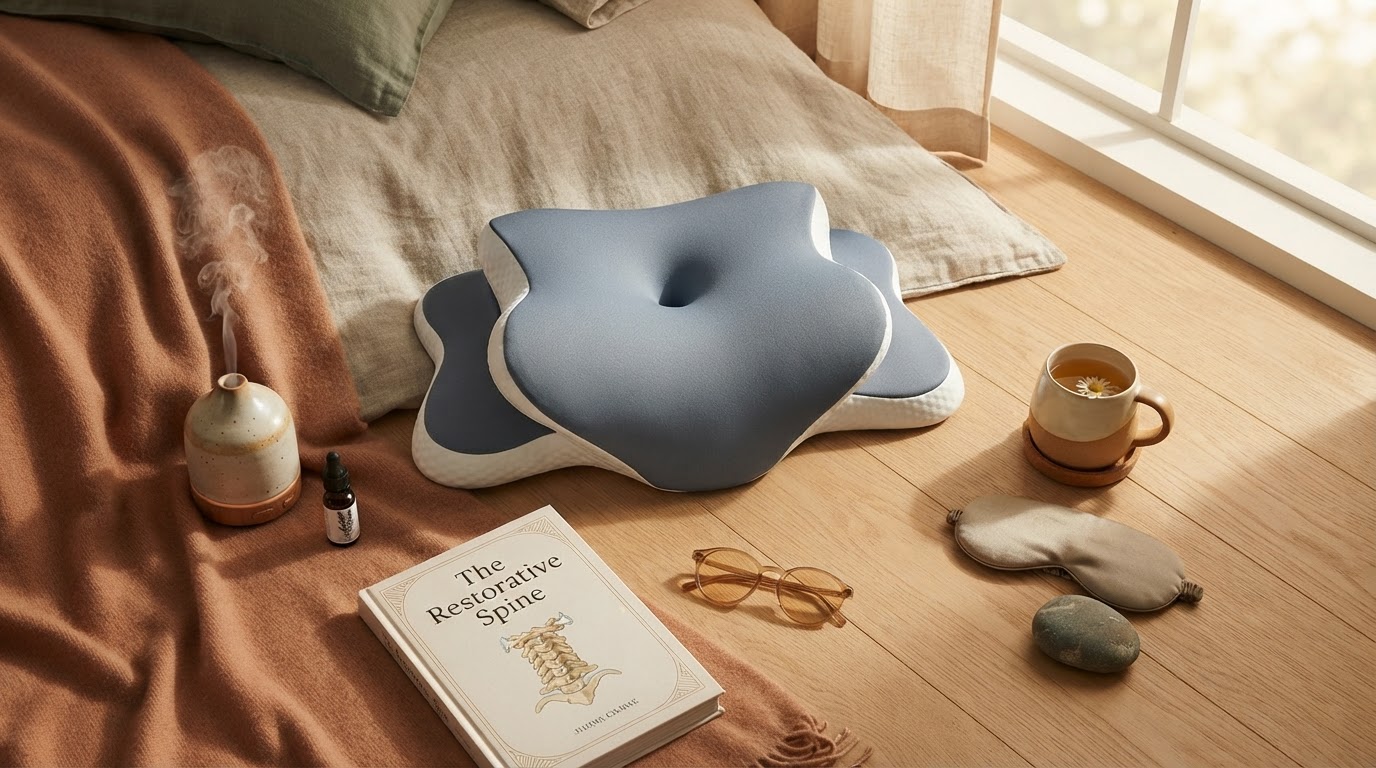
Memory Foam Cervical Pillow Neck Pain Relief addresses these mechanical failures through high-density visco-elastic polymers that respond to heat and pressure without collapsing. Unlike fiber or down, these materials are designed for orthopedic pillow for neck alignment, ensuring the cervical spine remains in a neutral position regardless of sleep posture. Here's the part nobody talks about: the contour shape is not just a stylistic choice; it is a functional necessity for maintaining the natural curve of the neck. By providing an elevated ridge under the neck and a recessed center for the head, the pillow prevents the lateral flexion that typically triggers nerve pain in side sleepers.
Specific data from user experiences shows a preference for ergonomic contour pillows for sleeping because they provide a consistent height, or loft, that does not shift during the night. For those seeking a pillow for pinched nerve in neck, the stability of memory foam is superior to adjustable shredded foam, which can migrate and leave the neck unsupported. The Forbes Vetted team, in their review of the Best Pillows For Neck Pain 2026, highlights that elevated bases in specialized pillows cater specifically to tense neck muscles by providing extra support that standard shapes cannot replicate. This structural integrity is what allows the surrounding musculature to relax, potentially reducing the inflammation that contributes to pillow for pinched nerve in neck symptoms.
The Decision Framework for Nerve Relief
When selecting a Memory Foam Cervical Pillow Neck Pain Relief, buyers must move past the marketing fluff and look at the physical dimensions and density ratings. A pillow that is too high will cause the neck to flex forward (protrusion), while one that is too low will lead to extension; both states are detrimental to a pinched nerve. The goal is to find a balance where the ear, shoulder, and hip remain aligned. I'll change my mind when a non-contoured pillow can demonstrate the same level of consistent foraminal opening as a dedicated cervical model, but until then, the data favors the contour.
Use this checklist to evaluate your selection:
- Verify the density of the memory foam to ensure it won't bottom out under a 10-12 lb load.
- Ensure the contour height matches your shoulder width if you are a side sleeper.
- Check for a recessed center to accommodate the occipital bone for back sleeping.
- Confirm the material is certified for low VOC emissions to prevent respiratory irritation during deep sleep.
- Look for a removable, breathable cover to manage the heat retention inherent in high-density foam.
Shop Memory Foam Cervical Pillow Neck Pain Relief here.