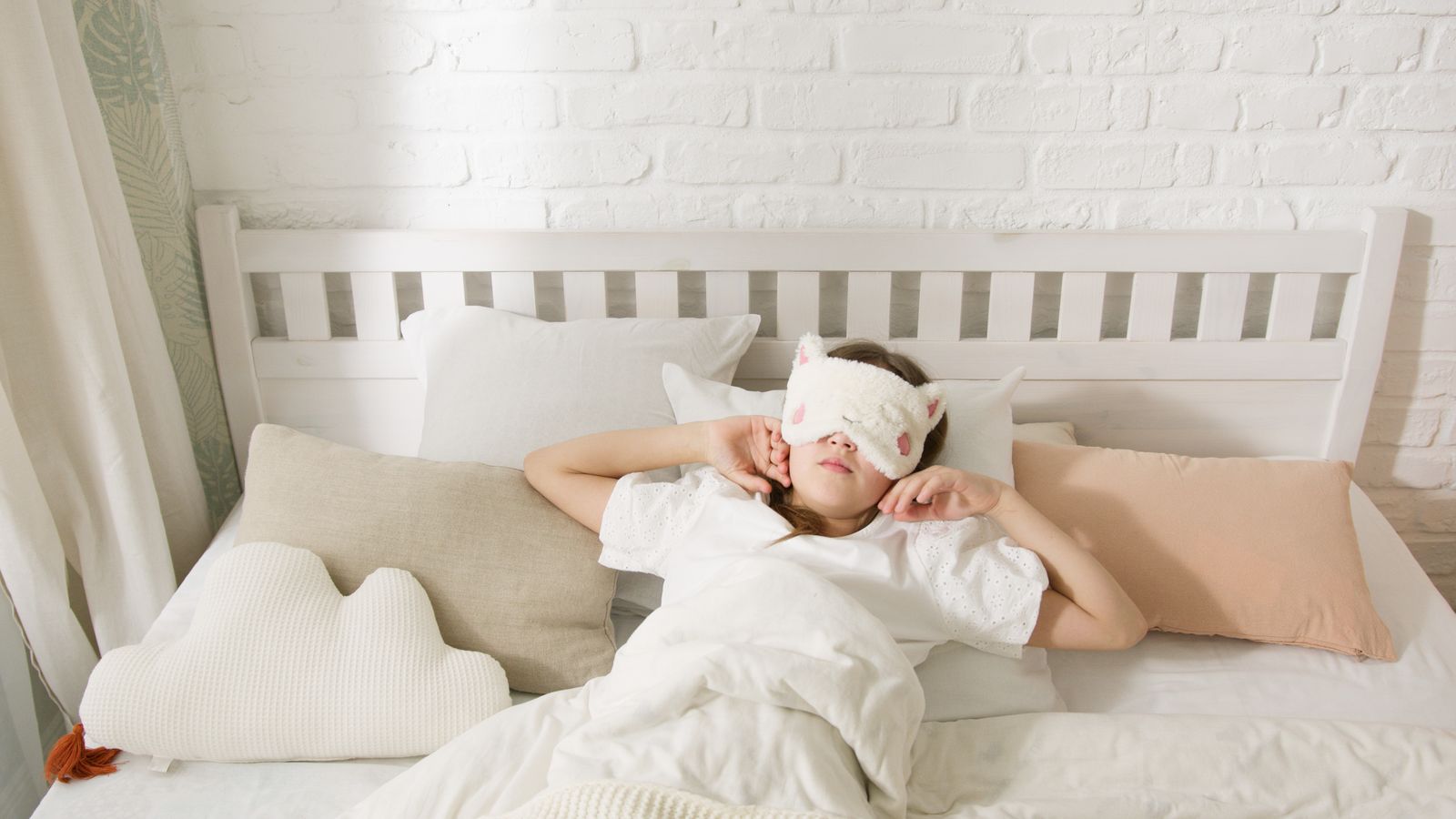
How to Correct Sleep Posture to Prevent Cervical Strain: A Position-by-Position Guide
To align your neck while sleeping and prevent cervical strain, match pillow height to the position you are in: side sleepers need enough loft so the ear stays over the shoulder; back sleepers need less height and a filled neck hollow; stomach sleepers need the lowest contour so the head is not cranked. A medium-firm memory foam cervical pillow with two edges can cover those postures without a stack of standard pillows. This is a position-by-position setup guide, not a medical treatment plan.
Side sleeping: replace the shoulder gap
On your side, the mattress-to-ear distance is real. If the pillow is too low, the neck side-bends toward the bed. If it is too high, it side-bends the other way. Aim for a straight nose, not a look-at-the-mattress chin.
Use the higher contour edge. Keep the arm from pulling the shoulder into a shrug. A pillow hugged to the chest that tucks the chin is a strain machine even if the cervical roll was perfect.
Back sleeping: fill the hollow, not the skull
Photo by https://kaboompics.com/ on Pexels
Supine alignment is a gentle C-curve. The roll sits in the neck crease; the head drops slightly into the cradle. The face stays roughly parallel to the ceiling. Two stacked pillows recreate daytime “looking at a phone” flexion.
Use the lower edge if your contour is dual-height. A small bolster under the knees can reduce the urge to twist off your back.
Stomach sleeping: damage control
Prone sleep rotates the neck. You cannot make it biomechanically elegant. You can make it less costly: lowest loft, head not jammed into a thick loaf, and a gradual shift toward side or back if you can.
If you only spend the last hour prone, a low contour still beats a fluffy pillow for that hour. Training the whole night off the stomach is the larger posture correction.
Position-by-position neck alignment
| Position | Alignment target | Pillow move | | --- | --- | --- | | Side | Ear over shoulder | High contour edge | | Back | Face to ceiling; neck filled | Low contour edge | | Stomach | Minimal rotation | Lowest loft available | | Combination | Usable after a roll | Dual-height, one pillow | | Reclined TV stack | Flexed neck | Sit up to watch; then one pillow |
Cervical-strain prevention checklist

Photo by Nothing Ahead on Pexels
- [ ] Pick a dual-height contour rather than two standard pillows.
- [ ] Photograph side and back poses once.
- [ ] Place the neck on the roll, not the skull on the high edge.
- [ ] Stop hugging a second pillow into a chin tuck.
- [ ] Give a new setup 3–7 nights.
- [ ] Get care for radiating pain, trauma, or numbness.
Frequently asked questions
Can one pillow really align the neck in every position?
A dual-height contour is the honest one-pillow answer. A single flat pad is usually too low for side sleeping and too mound-like for back sleeping.
How do I know my neck is aligned while I am asleep?
You cannot watch yourself. Use a still photo at lights-out and morning symptoms. Ear-over-shoulder and face-to-ceiling are the cues.
Is sleeping without a pillow better alignment?
Usually not. A hanging head is another strain vector. Neutral is a gentle curve.
Should I correct posture with a neck brace in bed?
Not unless a clinician told you to. A contour pillow is a shape, not a brace.
Related reading
Use these posture how-tos with the position guide.
- how to adjust sleeping position for neck pain
- how to improve sleeping posture
- how to use a cervical pillow correctly
- how to use a cervical pillow for side sleeping
- how to reset sleeping posture in daily steps
What to do next
Tonight, set one contour pillow for the position you actually start in — high edge for side, low edge for back, lowest for stomach — and skip the extra stack. That is how you align the neck while sleeping to prevent ordinary cervical strain.
Cover photo by Artem Podrez on Pexels.