Chiropractic Guide to Memory Foam Cervical Pillows
 Maya ChenContributing Editor
Many people who receive chiropractic adjustments for neck pain find the relief is temporary, often because their sleep posture undermines the progress made. The seven to nine hours spent in bed can either support or strain the cervical spine. A proper chiropractic neck support pillow is designed to bridge the gap between professional treatments and at-home care, providing the structural reinforcement needed to maintain spinal alignment throughout the night. Our Memory Foam Cervical Pillow Neck Pain Relief is engineered based on these therapeutic principles to offer consistent, corrective support.
The Chiropractic Standard for Healthy Sleep Posture
Chiropractors focus on the biomechanics of the entire spine, including the natural C-shaped curve of the neck, known as the cervical lordosis. Maintaining this curve is essential for distributing weight, absorbing shock, and preventing nerve compression. When you sleep, the goal is to keep your spine in a neutral position—a straight line from your head to your pelvis.
Traditional, fluffy pillows often fail this test. They either elevate the head too high, forcing the neck into forward flexion, or collapse under its weight, allowing the neck to bend unnaturally. Over time, this misalignment can lead to chronic muscle strain, stiffness, and a gradual flattening of the natural cervical curve. This is why chiropractors emphasize the importance of a pillow that actively supports the neck's structure.
What Defines an Effective Chiropractic Neck Support Pillow?

Photo by Yan Krukau on Pexels
When evaluating a pillow, chiropractors look for specific features that promote spinal health. The most critical elements are material, shape, and firmness, which work together to provide tailored support.
- Material: High-density memory foam is often recommended by professionals. Unlike feathers or polyester fill, memory foam contours precisely to the unique shape of your head and neck. This adaptability ensures there are no gaps in support, which is crucial for relaxing the surrounding muscles.
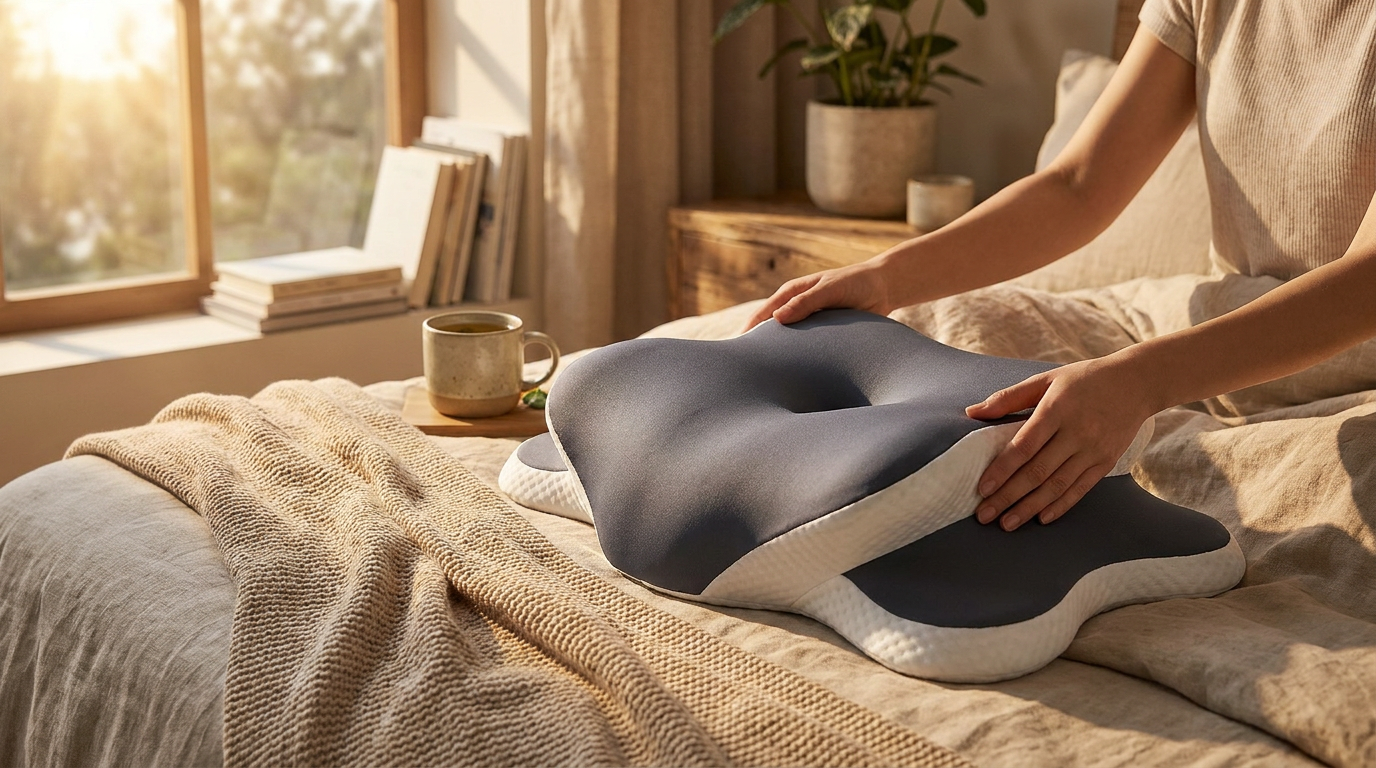
- Shape: A generic rectangular pillow cannot adequately support the cervical curve. An effective design, often called an ergonomic contour pillow for sleeping, features a specific depression for the head and a raised bolster to support the neck. This contouring is vital for maintaining the lordotic curve for back sleepers and keeping the spine straight for side sleepers.
How Our Pillow Aligns with Chiropractic Principles
The Memory Foam Cervical Pillow Neck Pain Relief was specifically engineered to meet these clinical standards. Its design directly addresses the common causes of sleep-related neck pain by providing targeted, structural support.
Central Contour for Back Sleepers
For back sleepers, the primary goal is to prevent the neck from flattening. Our pillow features a central cavity that cradles the head, allowing it to rest comfortably without being pushed forward. Simultaneously, a supportive contour roll fits snugly under the neck, reinforcing the natural C-curve. This design promotes an ideal orthopedic pillow for neck alignment, allowing the ligaments and muscles to rest in a neutral, unstrained position.
Raised Side Panels for Side Sleepers
Side sleepers require a higher loft to fill the space between the ear and the outer shoulder, preventing the head from tilting downwards and straining the neck. The Memory Foam Cervical Pillow Neck Pain Relief has raised side panels that are firmer and higher than the center. This ensures the head remains level with the rest of the spine, preventing lateral flexion and reducing pressure on the shoulder.
High-Density Memory Foam for Lasting Support
Our pillow is crafted from high-density memory foam that adapts to your body heat and pressure, creating a personalized fit every night. It won't flatten or lose its shape, ensuring the support you feel when you fall asleep remains consistent until you wake up. This reliability is a key reason many users find it superior to other options, as highlighted in various stiff neck relief pillow reviews.
How long does it take to get used to a cervical pillow?

Photo by Atlantic Ambience on Pexels
There is often an adjustment period of 3-5 days when switching to a supportive cervical pillow. Your neck muscles are accustomed to their previous sleeping position, even if it was unhealthy. It's normal to feel some initial mild discomfort as your spine adapts to proper alignment. We recommend using the pillow for a few hours each night at first and gradually increasing the duration as your body adjusts.
Can a chiropractic pillow help with tension headaches?
Yes, for many people, a chiropractic pillow can help alleviate tension headaches. These headaches are often caused by muscle strain and tension in the neck and upper back, frequently due to poor posture. By promoting proper spinal alignment and reducing muscle strain during sleep, a cervical pillow can help address one of the root causes of cervicogenic (neck-related) and tension headaches.