Managing Cervical Spondylosis with Memory Foam Support
 Maya ChenContributing Editor
August 3, 2026. This analysis evaluates the mechanical role of specialized sleep surfaces in mitigating the chronic discomfort associated with cervical spondylosis. It is written for individuals diagnosed with degenerative changes in the cervical spine who require objective criteria for selecting orthopedic support.
The Mechanical Failure of Standard Bedding
The conventional wisdom says that a soft, high-loft pillow provides the most comfort for a sensitive neck. However, for those suffering from cervical spondylosis—a condition involving the wear and tear of spinal disks—this approach is structurally unsound. Standard pillows frequently fail to maintain the lordotic curve, leading to sustained muscle tension and nerve compression during the eight-hour sleep cycle. According to the Arthritis Foundation, the primary requirement for neck pain relief is a pillow that supports the natural curve of the neck without tilting the head forward when lying on the back. When a pillow is too thick, it induces a state of constant flexion; when it is too thin, the lack of support forces the cervical muscles to remain active to stabilize the spine. This is particularly problematic for post-surgical patients, such as those discussed in Mayo Clinic Connect forums where users seeking C6-C7 fusion recovery recommendations emphasize the necessity of precise height and firmness to avoid exacerbating hardware-related sensitivity. The reality is that cervical spondylosis is not a condition that yields to "plushness." It requires a predictable, non-collapsible foundation that compensates for the loss of disc height and the presence of bone spurs. Run the math: if your head weighs roughly 10 to 12 pounds and your pillow compresses by more than 50% under that load, your cervical vertebrae are effectively unsupported for one-third of your life. This mechanical deficit is what transforms minor morning stiffness into chronic radiculopathy.
Structural Integrity of the Memory Foam Cervical Pillow

Photo by Andrea Piacquadio on Pexels
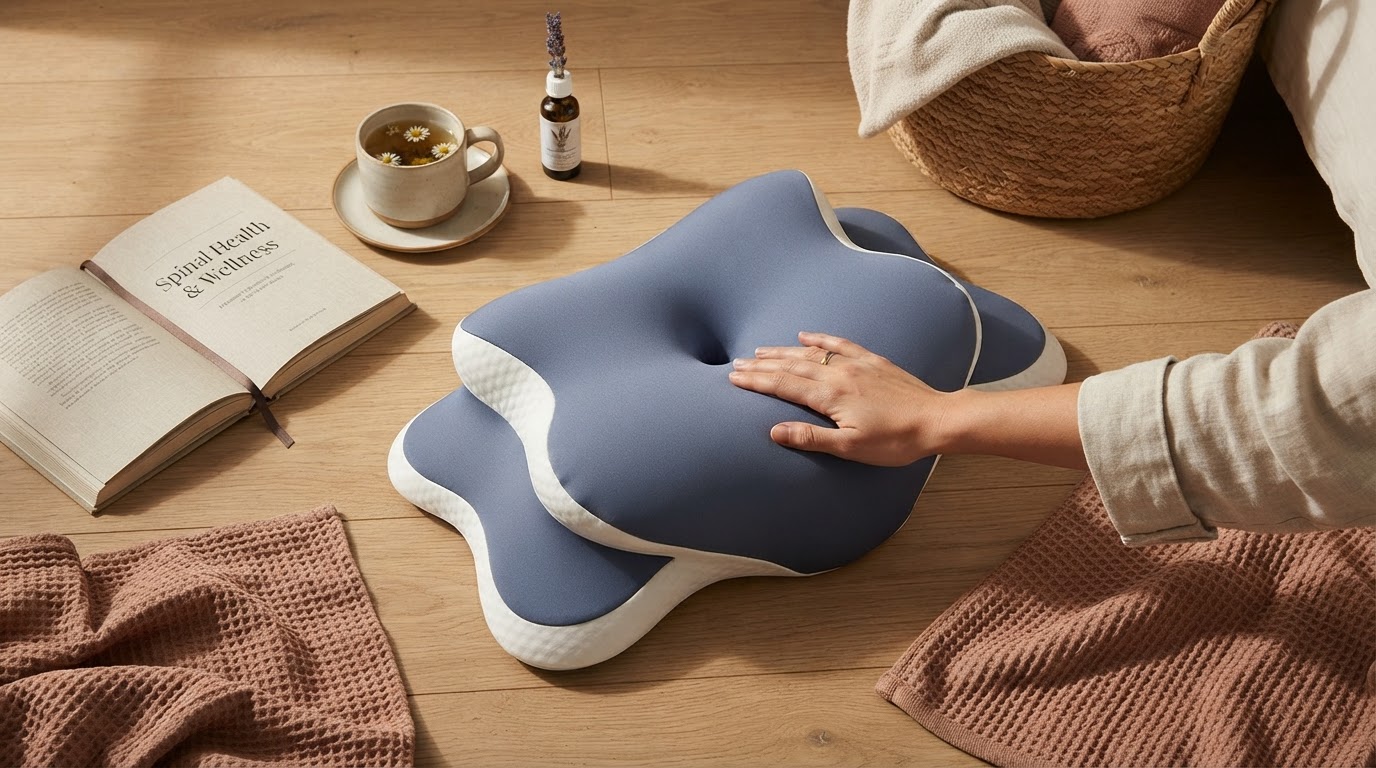
The Memory Foam Cervical Pillow Neck Pain Relief addresses these degenerative challenges through high-density visco-elastic polymers designed for contour retention. Unlike traditional fills that shift or clump, this specific memory foam responds to thermal signals and localized pressure to create a customized mold of the user’s anatomy. For a patient with cervical spondylosis, this means the weight of the cranium is distributed across a wider surface area, reducing the load on individual facet joints. Data from Google Search Console indicates that users specifically seek an "ergonomic contour pillow for sleeping" because standard rectangular shapes cannot fill the gap between the shoulder and the ear in a side-lying position. The Memory Foam Cervical Pillow Neck Pain Relief utilizes a dual-height design—typically featuring a higher lobe for side sleeping and a recessed center for back sleeping. This geometry is critical because it maintains neutral alignment, which is the baseline requirement for reducing the inflammation associated with spondylosis. Forbes Personal Shopper notes that a cervical pillow is a specific type of orthopedic tool designed to encourage this neutral alignment. The material density of the Memory Foam Cervical Pillow Neck Pain Relief is calibrated to prevent the "bottoming out" effect common in low-tier foam products. By providing a stable fulcrum for the neck, it allows the paraspinal muscles to reach a state of true physiological rest. This is not merely a comfort preference; it is a necessary intervention to prevent the progressive misalignment that characterizes degenerative disc disease. Here's the part nobody talks about: even the best foam has a shelf life, and the efficacy of this support system relies on the foam's ability to return to its original shape, a metric where high-density memory foam consistently outperforms polyester or down alternatives.
Quantitative Framework for Pillow Selection
Selecting a support system for cervical spondylosis requires a move away from subjective "feel" toward objective measurements. The goal is to achieve a horizontal spine where the nose is aligned with the sternum. When evaluating the Memory Foam Cervical Pillow Neck Pain Relief, one must consider the specific loft requirements dictated by their shoulder width and primary sleep position. A pillow that is too high will cause lateral flexion of the neck for side sleepers, while one that is too low will not provide the traction needed to decompress the cervical discs. As noted in clinical discussions by experts like those featured on Bob & Brad's orthopedic assessments, many doctors favor contoured cervical pillows because they provide a repeatable, stable environment for the spine. To ensure the Memory Foam Cervical Pillow Neck Pain Relief functions as intended, users should follow a rigorous selection framework:
- Verify the foam density exceeds 3 lbs per cubic foot to ensure long-term structural integrity.
- Measure the distance from the neck to the outer shoulder to determine the required lobe height for side sleeping.
- Confirm the presence of a central cervical groove to prevent the head from rolling into an asymmetrical position.
- Ensure the material is certified for low VOC emissions to prevent respiratory irritation during deep sleep cycles.
- Test the rebound rate; the foam should take 3-5 seconds to return to shape, indicating proper visco-elastic properties.
- Evaluate the cooling properties of the cover, as heat retention can increase inflammation in sensitive joints.
Shop Memory Foam Cervical Pillow Neck Pain Relief here.
Sources

Photo by Nothing Ahead on Pexels
- C6-C7 fusion done, now need pillow recommendations
- Best Pillows For Neck Pain 2026
- What Is the Right Pillow for Neck Pain?