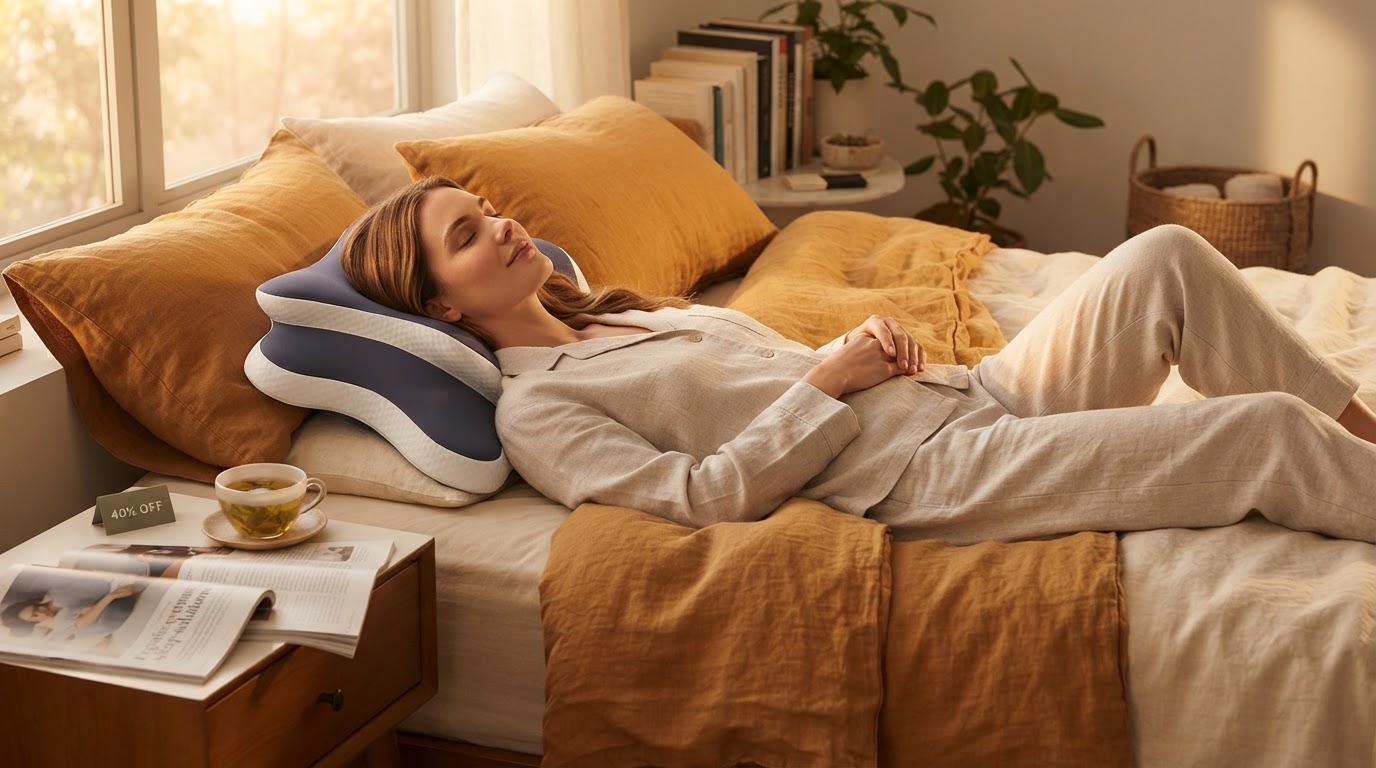
Cervical Pillow Offers Relief Amid Chronic Pain Trends
 Priya RamanSenior Analyst
October 22, 2026 — Recent consumer reports highlight a significant shift toward specialized ergonomic bedding as a primary intervention for chronic cervical discomfort. According to the New York Post, a specific 40% off deal on contour pillows has recently gained traction for its ability to mitigate sleep-disrupting pain. This trend underscores a growing reliance on high-quality memory foam to address spinal alignment issues.
To evaluate the efficacy of these interventions, we must establish a framework for sleep ergonomics. Two axes matter here: support density and postural adaptability. Support density refers to the material's ability to maintain structural integrity under weight, while postural adaptability measures how the contour responds to varying sleep positions. Think of it as a matrix of structural stability versus anatomical compliance. High-performance bedding, such as the Memory Foam Cervical Pillow Neck Pain Relief, aims for the upper-right quadrant of this matrix, providing firm orthopedic support while adapting to the unique curvature of the user's neck.
Market data suggests that the surge in interest is driven by the product's versatility. According to the New York Post, users with chronic pain found the pillow's design effectively "saved" their sleep quality during peak periods of discomfort. Once you see it this way, the value of a contour ergonomic design becomes clear; it is not merely a comfort item but a tool for pressure point relief. This is particularly relevant for those seeking cervical support for side sleepers or orthopedic solutions for tension headaches.
Expert tip: When transitioning to a cervical pillow, ensure the higher side of the contour is positioned under the neck rather than the head. This specific orientation facilitates natural neck curvature and reduces strain on the cervical vertebrae, which is essential for improving posture during sleep and managing shoulder stiffness.
The decision rule: If a user experiences persistent morning stiffness or radiating neck tension, the transition to a breathable, high-density memory foam structure is indicated to restore neutral spinal alignment.
Effective sleep hygiene requires consistent support that adapts to the body's unique shape. By utilizing orthopedic designs, individuals can significantly reduce the physical stressors associated with restless nights.